Sony LinkBuds Clip: Is Open-Ear Comfort Worth the Price?
Most wireless earbuds chase the same goal: seal your ears shut and drown out the world. Sony’s LinkBuds Clip takes the opposite approach. Instead of sitting inside your ear canal, the buds clip onto the outside of your ear, letting you hear music and your surroundings at the same time.
That open-ear category isn’t new — Shokz, Huawei, and Bose all sell similar designs. What makes the LinkBuds Clip worth a closer look is where Sony has positioned it: a premium price tag, a clip-on shape rather than a hook or bone-conduction band, and a feature set built around comfort and call clarity rather than noise cancellation. Here’s what the specs and early coverage tell us, and who these earbuds actually make sense for.
Design: Built for All-Day Wear
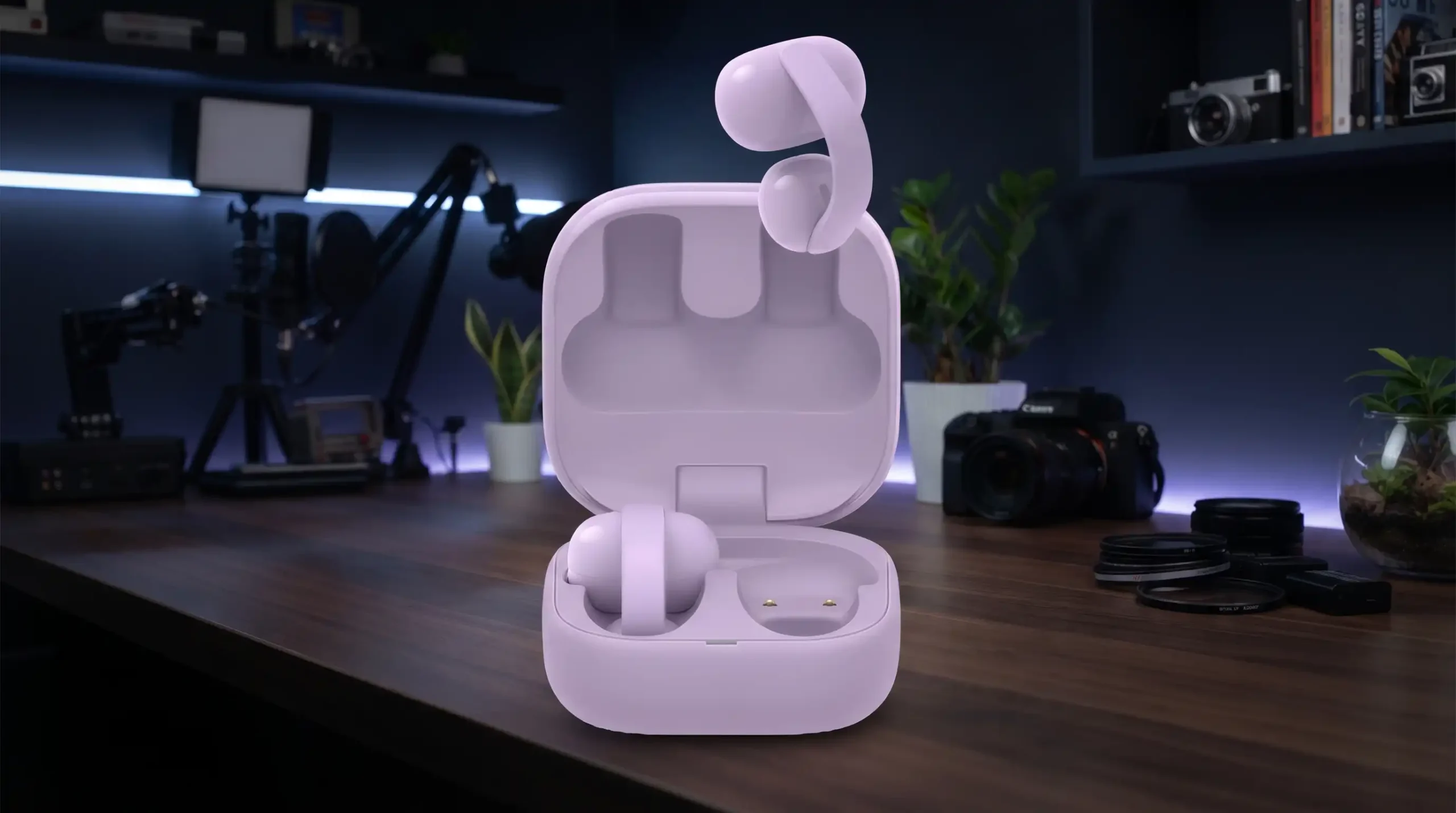
Sony ships the LinkBuds Clip with a distinctive case, available in black, green, greige, and lavender to match the earbuds themselves. Each bud weighs roughly 6.4 grams, and the pair adds about 42 grams with the case — light enough to disappear in a pocket, even if the case itself isn’t the smallest on the market.
The clip design wraps around the outer ear rather than plugging into it. A small node rests near the ear canal while the driver housing sits just outside it. Sony also sells optional Fitting Cushions separately for anyone who needs extra grip, since ear shapes vary widely and a clip-style fit doesn’t work identically for everyone.
Durability gets a modest boost too. The buds carry an IPX4 rating, which covers sweat and light rain but stops short of full water resistance. That’s a sensible spec for a workout companion, though it’s not a swimming or heavy-rain solution.
Features: Sony’s Software Does the Heavy Lifting
Since the LinkBuds Clip skip active noise cancellation entirely, most of the “smart” functionality lives in the companion Sound Connect app, available on both Android and iOS. The app exposes a 10-band equalizer, several sound presets, and listening modes such as Voice Boost and Sound Leakage Reduction for cutting down how much audio spills out to people nearby.
Multipoint connectivity is a genuinely useful inclusion here — pairing with two devices at once and switching between them without diving into Bluetooth settings every time saves real friction for anyone bouncing between a laptop and a phone during the workday.
On the call-quality side, Sony leans on dual microphones, a bone-conduction sensor, and AI-based signal processing to isolate the wearer’s voice from background noise. This is the same general approach Sony has used across its open-ear lineup, refined further here.
Specifications at a Glance
- Driver: 10mm
- Bluetooth version: 5.3
- Codec support: SBC, AAC
- Frequency response: 20 Hz–20 kHz
- Water resistance: IPX4 (buds only)
- Battery life: Up to 9 hours per charge, up to 37 hours total with the case
- Quick charge: Roughly 3–5 minutes for about an hour of playback
- Companion app: Sony Sound Connect
Pricing and Availability
Pricing varies noticeably by region, which is common for a product Sony is rolling out across multiple markets at once:
- United States: $229.99
- India: ₹18,990 (roughly $215–220 USD at typical exchange rates, though this will shift with currency movements over time)
- Australia: AU$329.95
- UK: Around £180
Optional accessories, including extra Fitting Cushions and case covers, run about $24.99 separately. Compared to open-ear rivals like the Shokz OpenFit or the significantly cheaper Earfun Clip 2, Sony is pricing the LinkBuds Clip toward the premium end of the category — a position it will need its sound quality and build to justify.
Where the LinkBuds Clip Make Sense — and Where They Don’t
An open-ear design is a trade-off by nature, and the LinkBuds Clip doesn’t hide that. Without any seal or active noise cancellation, deep bass and full isolation simply aren’t part of the package — that’s true of every earbud in this category, not a flaw unique to Sony. Anyone shopping primarily for bass-heavy music or noise-blocking on a commute will likely find a sealed pair of earbuds a better fit.
Where this category tends to shine is with situational awareness: motorcycle and bike commuters, parents keeping an ear on kids, office workers who don’t want to feel cut off from conversations around them, and anyone who finds sealed earbuds uncomfortable during long wear. Podcast and audiobook listeners also tend to get along well with open-ear designs, since vocal clarity matters more than sub-bass punch for spoken-word content.
The lack of wireless charging and wear detection is worth flagging too. At this price point, both features show up on several competing earbuds, and their absence here is a reasonable point of comparison when weighing the LinkBuds Clip against alternatives like the Huawei FreeClip or Bose Ultra Open.
Quick Verdict
| Specification | Rating (1–10) |
|---|---|
| Design & Comfort | 8 |
| Sound Quality (for open-ear category) | 7 |
| Battery Life | 8 |
| App & Features | 8 |
| Value for Price | 6 |
Pros and Cons
Pros
- Lightweight clip design suited to long wear sessions
- Strong battery life, with fast top-ups via quick charge
- Multipoint connectivity works across phone and laptop seamlessly
- Sound Connect app offers genuine EQ customization, not just presets
- Solid call-clarity hardware, including a bone-conduction sensor
Cons
- No active noise cancellation, by design of the open-ear category
- Bass response is inherently limited compared to sealed earbuds
- No wireless charging or wear detection at this price point
- Priced above several open-ear competitors with similar core features
- Clip-style fit won’t suit every ear shape equally well