Oppo Bets on 2nm to Lead the Next Flagship Cycle
Oppo just gave us our clearest look yet at the Find X10 Pro Max, and the headline feature says a lot about where the flagship phone race is heading. The device will carry MediaTek’s Dimensity 9600 Pro, one of the first mobile chipsets built on TSMC’s 2nm N2P process. That single detail places this phone at the front of a new generation, and it is why I think this launch deserves attention beyond the usual spec-sheet shuffle.
Oppo has confirmed a China launch date of September 22, and the company plans to bring the phone to international markets afterward. Below, I break down what actually changes with this chip, what the camera system brings to the table, and whether the Find X10 Pro Max looks like a genuine step forward rather than an incremental refresh.
Why the Dimensity 9600 Pro Chip Matters
Chip generations used to be measured mostly in raw speed. That calculus has shifted. Efficiency now decides how a flagship actually feels in daily use, and the 2nm N2P process addresses exactly that. Oppo says the new node improves CPU multi-core energy efficiency by up to 61 percent over the previous generation. In practical terms, that efficiency gain matters more than a benchmark score, since it should translate into a phone that runs cooler and lasts longer between charges under heavy load.
MediaTek paired two C2-Ultra cores, clocked up to 4.55GHz, with six performance cores in an All-Big-Core layout. The company also gave each core independent frequency control. This setup lets the chipset allocate power more precisely across tasks, and Oppo credits it with a 17 percent bump in overall CPU performance.
Graphics and On-Device AI
Gamers and creators get their own upgrade path here. The chipset’s G2-Ultra NX GPU adds ray tracing support along with neural graphics features, and Oppo claims a 27 percent performance increase during sustained, heavy workloads. That sustained-performance number stands out, since throttling under load is where most flagship phones actually lose the plot during long gaming sessions.
On-device AI gets a dedicated dual-NPU setup. Oppo says the high-performance NPU boosts LLM prefill performance by 51 percent, while a second, Super Efficient NPU cuts power draw by 40 percent. MediaTek built this platform to run on-device large-language-model inference and computational imaging without leaning as heavily on the cloud. That direction matches where the whole industry is moving, and it is a smart bet for a phone meant to stay relevant for years.
Oppo also developed something it calls the Laminar Flow Engine, built jointly with MediaTek. This system links rendering directly to system scheduling so the phone can balance responsiveness against battery drain more intelligently. Oppo says the payoff includes faster app launches and smoother scrolling during demanding tasks, such as flipping quickly through a large photo library.
Camera System: Hasselblad Returns With Triple 200MP Sensors
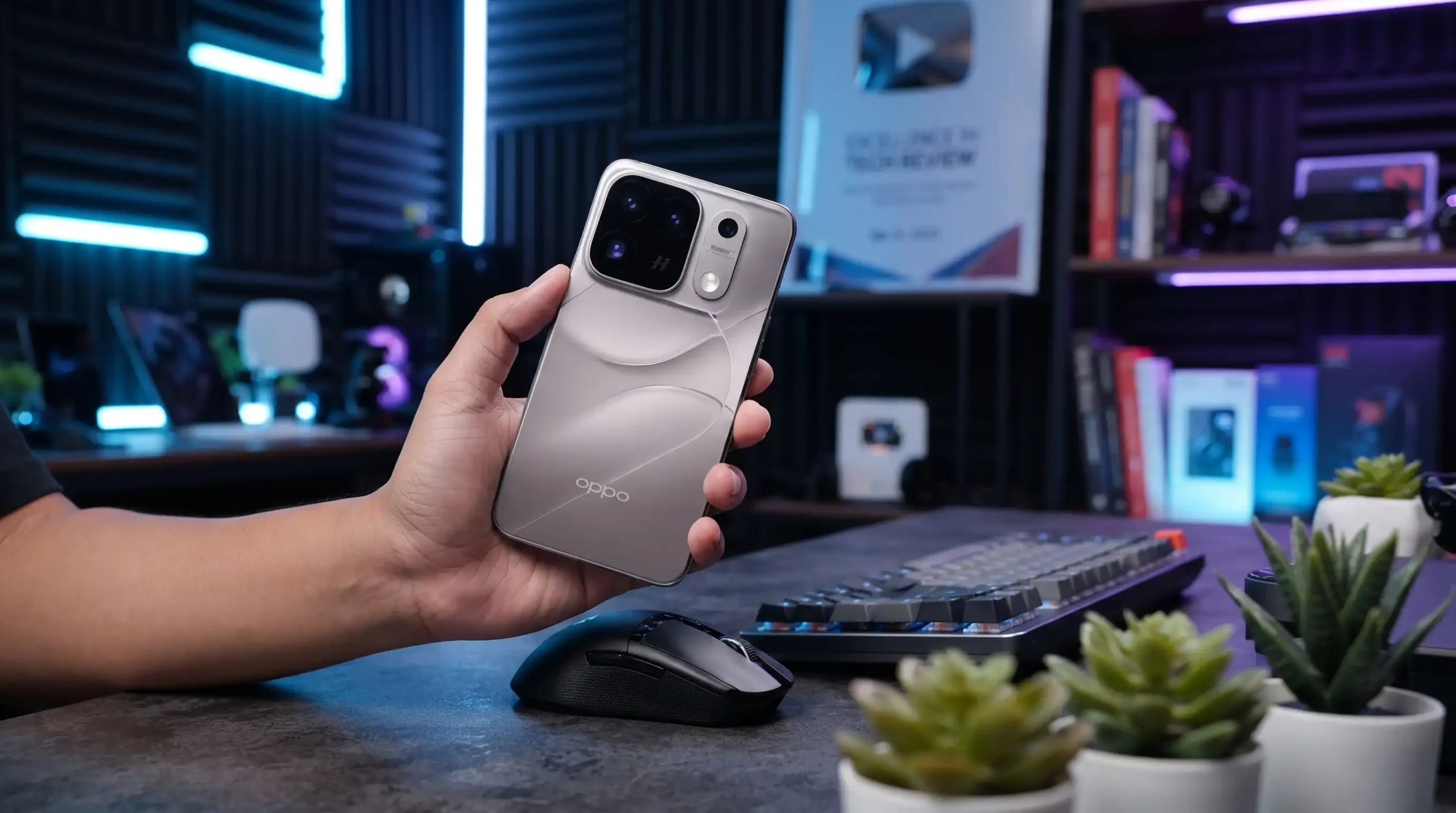
The rear camera module keeps a rectangular layout, with three lenses grouped together and a separate section for the flash and an additional sensor. The headline spec here is bold: three 200-megapixel rear sensors, developed in partnership with Hasselblad. Triple 200MP setups are still rare even among flagships, so if Oppo tunes the processing well, this could be one of the more capable camera phones of the year.
Oppo is also carrying over its collaboration with Hasselblad into the phone’s colour science, using its second-generation Danxia colour system. Colour accuracy has been a genuine differentiator for Oppo’s recent flagships, and this update suggests the company intends to keep pushing that advantage rather than resting on last year’s tuning.
Design, Colours, and Battery Life
Oppo confirmed three colourways for the Find X10 Pro Max: Warm Orange, Moon White, and Light Titanium. Battery capacity reaches up to 8,000mAh, which is a substantial jump for a phone in this class and should ease any anxiety around all-day use, especially with the efficiency gains from the new chipset working alongside it.
Release Date and Availability
The Find X10 Pro Max launches in China on September 22 at 7pm local time (4:30pm IST). Oppo has not announced pricing yet, and no international release date exists at the time of writing. Expect more concrete availability and pricing details once Oppo holds its global launch event. This article will get updated as soon as that pricing and rollout information becomes official.
Quick Verdict
| Specification | Rating (1–10) |
|---|---|
| Performance (Dimensity 9600 Pro CPU/GPU) | 9 |
| AI & On-Device Processing | 8.5 |
| Camera System (Triple 200MP, Hasselblad) | 9 |
| Battery Capacity (8,000mAh) | 9 |
| Design & Colour Options | 8 |
| Value (pending pricing) | Not yet rated |
Pros
- First-wave 2nm chipset delivers major efficiency and performance gains
- Triple 200MP camera setup with Hasselblad tuning
- Large 8,000mAh battery for extended daily use
- Dual-NPU design supports serious on-device AI workloads
- Laminar Flow Engine targets smoother real-world performance, not just benchmarks
Cons
- Pricing and international availability remain unannounced
- Camera performance claims still need independent, real-world testing
- Global rollout timeline depends on a separate future announcement