Tecno's latest budget contender, the Pova 8 5G, leans hard into personality rather than blending into the crowded midrange smartphone market. Between its massive 8,000mAh battery, a semi-transparent "interstellar spaceship" inspired back panel, and an eye-catching LED light matrix, this phone clearly wants to stand out. But does it back up its flashy looks with solid everyday performance? Here's a full breakdown.
Design and Build Quality
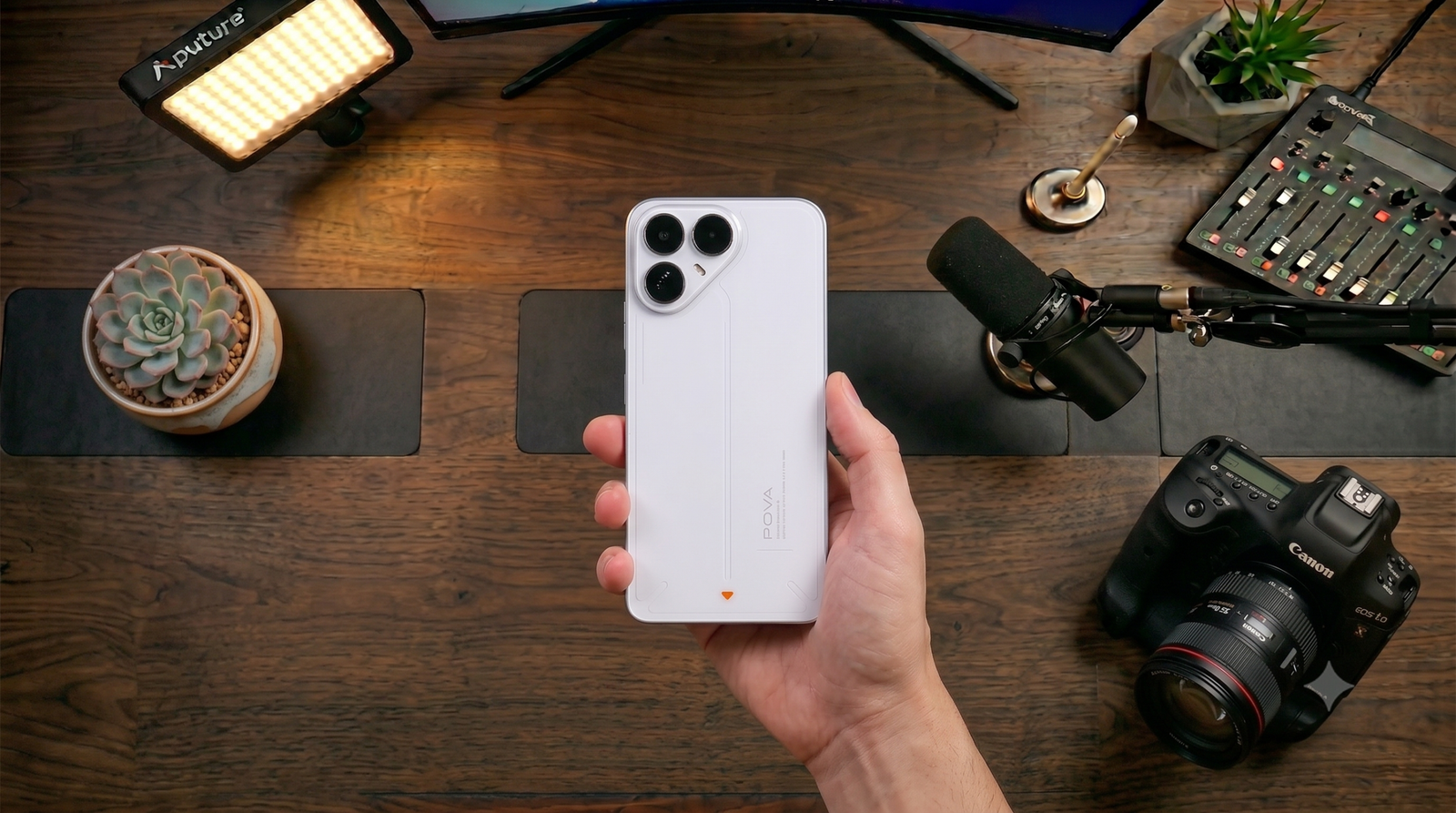
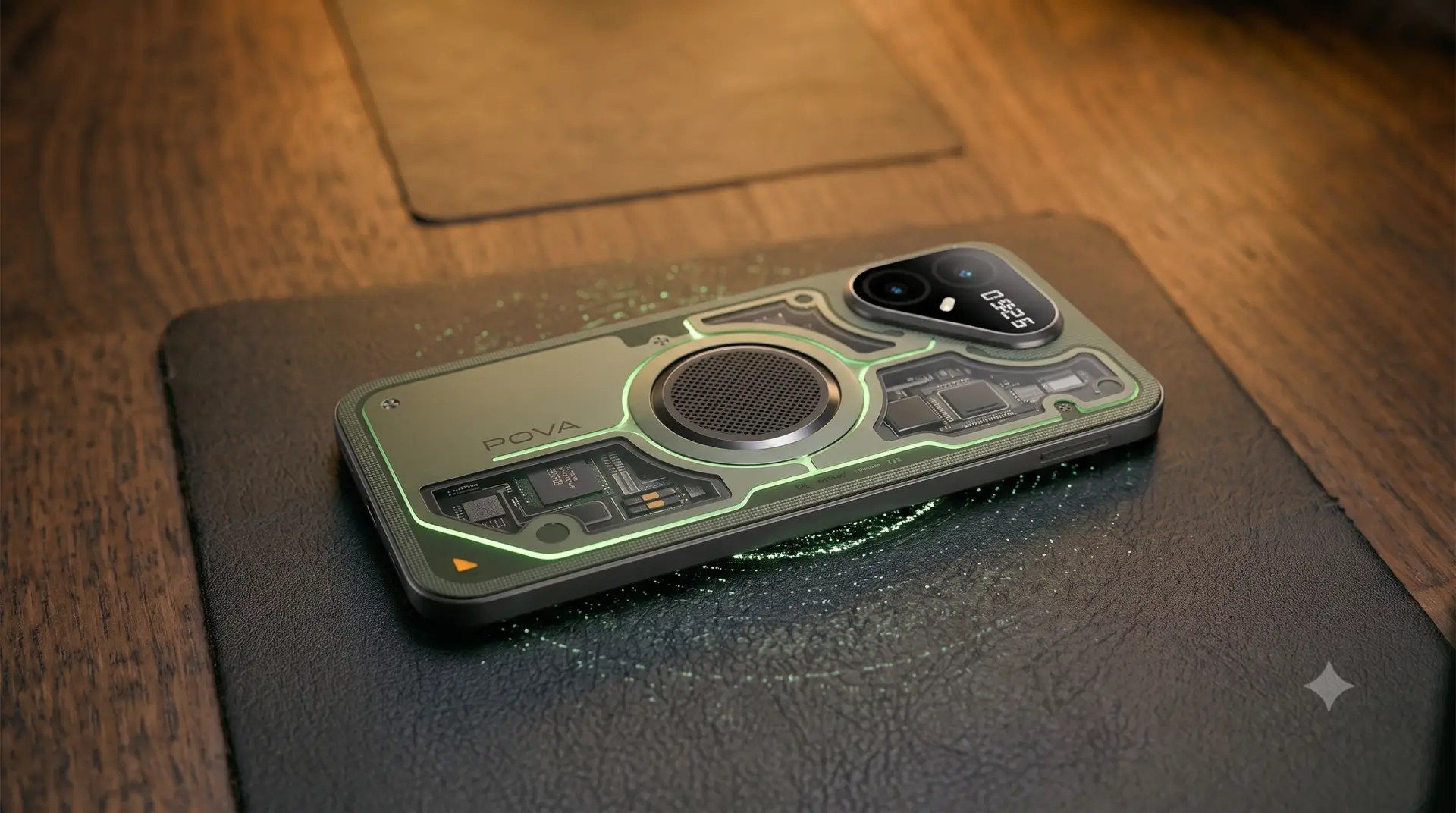
Tecno took a noticeably experimental route with the Pova 8's design, giving it a semi-transparent rear panel meant to evoke a sci-fi, spacecraft-like aesthetic. It mostly works, and the triangular camera housing ties the whole look together nicely. That said, the decision to print visible text across the back — including chipset and battery specs — feels like an unnecessary design choice, even if it's barely noticeable on the lighter color variant.
The phone comes in several color options depending on region, including white, black, orange, and green finishes, with slightly different naming conventions across markets like India.
Build quality holds up well for a budget device. The chassis feels sturdy with minimal flex, though both the back panel and middle frame are made of plastic rather than metal or glass. The front display is protected by an unspecified type of toughened glass. Despite the plastic construction, the phone carries an IP64 rating for dust and splash resistance, along with MIL-STD-810H durability certification, plus a noticeably thick rubber gasket around the SIM tray for extra protection.
Button placement is straightforward and comfortable, with a responsive side-mounted fingerprint scanner built into the power button. An IR blaster sits on the top edge, while the bottom houses the speaker grille, microphone, SIM tray, and USB-C port.
The standout design feature, however, is the Alive Matrix Display — a 117-dot LED light panel embedded on the back near the camera module. It supports dozens of preset light animations that react to calls, notifications, music, charging, and more, and even includes a couple of playful mini-games. It's a clear nod to similar lighting systems seen on other brands, but it adds a fun, distinctive touch that's rare in this price segment.
Display
The Pova 8 features a large 6.76-inch IPS LCD panel with FHD+ resolution and a 144Hz refresh rate on paper. Brightness performance is respectable for the price, reaching close to 1,000 nits with auto-brightness and boost mode enabled, and around 650 nits when manually maxed out — enough for comfortable outdoor visibility, though direct sunlight can wash out colors somewhat.
Unfortunately, the high refresh rate doesn't translate to a consistently smooth experience across all apps, and the panel suffers from noticeably slow pixel response times, resulting in visible smearing during scrolling. On the software side, it supports HDR10, HDR10+, and HLG decoding, though without dedicated hardware HDR support, and it carries Widevine L1 certification for full HD streaming on services like Netflix.
Battery Life and Charging
The Pova 8's headline feature is undoubtedly its enormous 8,000mAh battery, and it delivers strong real-world endurance, easily supporting a full day of use and often stretching close to two days for lighter users.
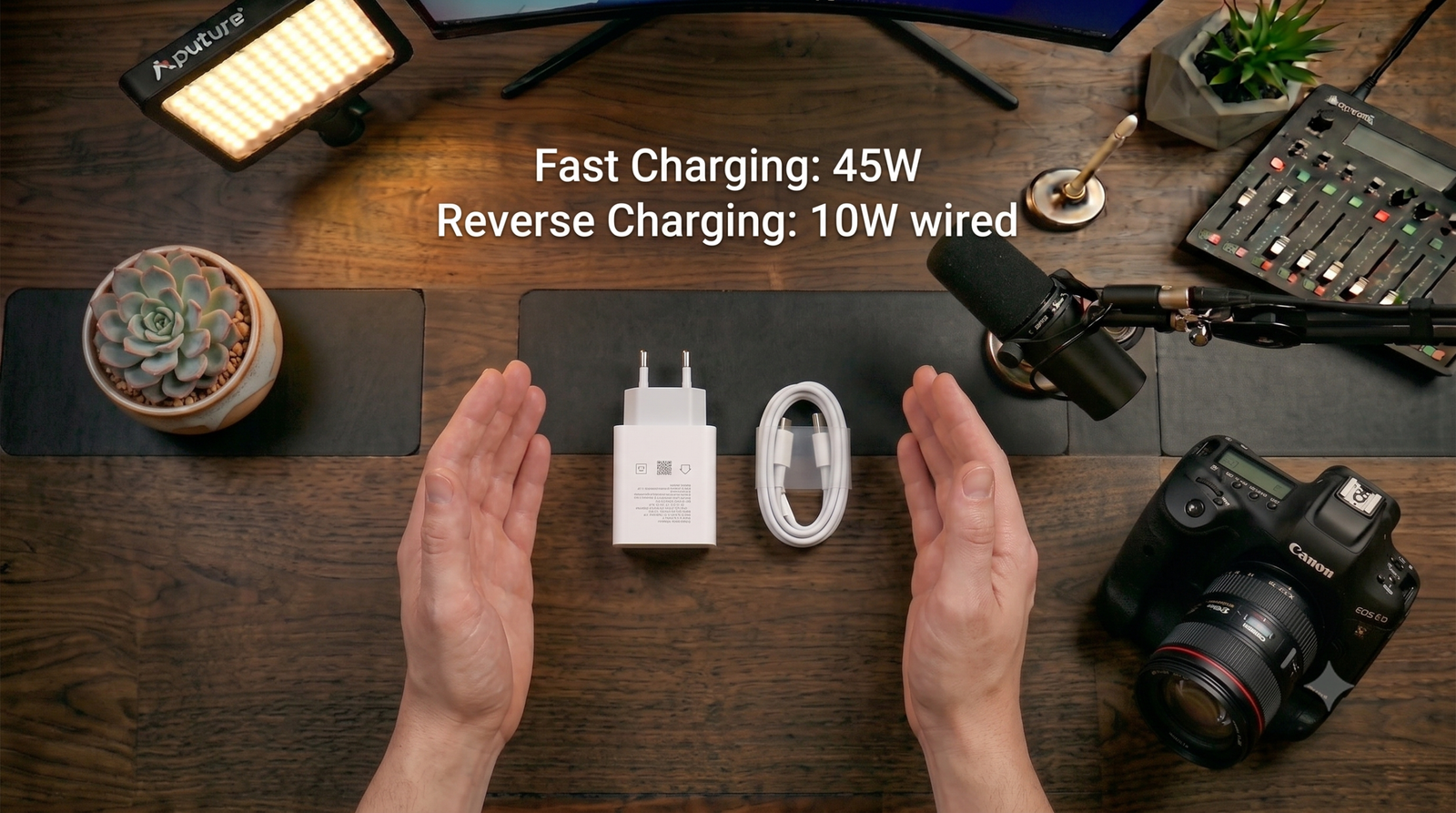
Charging, however, doesn't quite live up to its marketing. Despite being advertised with 45W fast charging support, actual measured charging speeds topped out closer to 25W in testing. A full charge takes just under an hour and a half, with roughly 39% charge reached after 30 minutes on the charger. Battery management features are a nice touch, including customizable charge limits and AI-based charging protection based on usage habits.
Audio
Audio comes from a single bottom-firing speaker, supplemented by a fairly quiet earpiece acting as a secondary channel, though true stereo separation is essentially absent. Sound quality is decent for the segment, with clear mids, though overall loudness is on the lower side.
A few software-based audio features stand out, including Dolby Atmos support and multiple noise suppression modes for calls and recordings. One particularly interesting option, called "Pure Voice," lets users create a personal voice print that the system can isolate from background noise — useful in quiet environments like an office, though less effective in noisier settings.
Performance
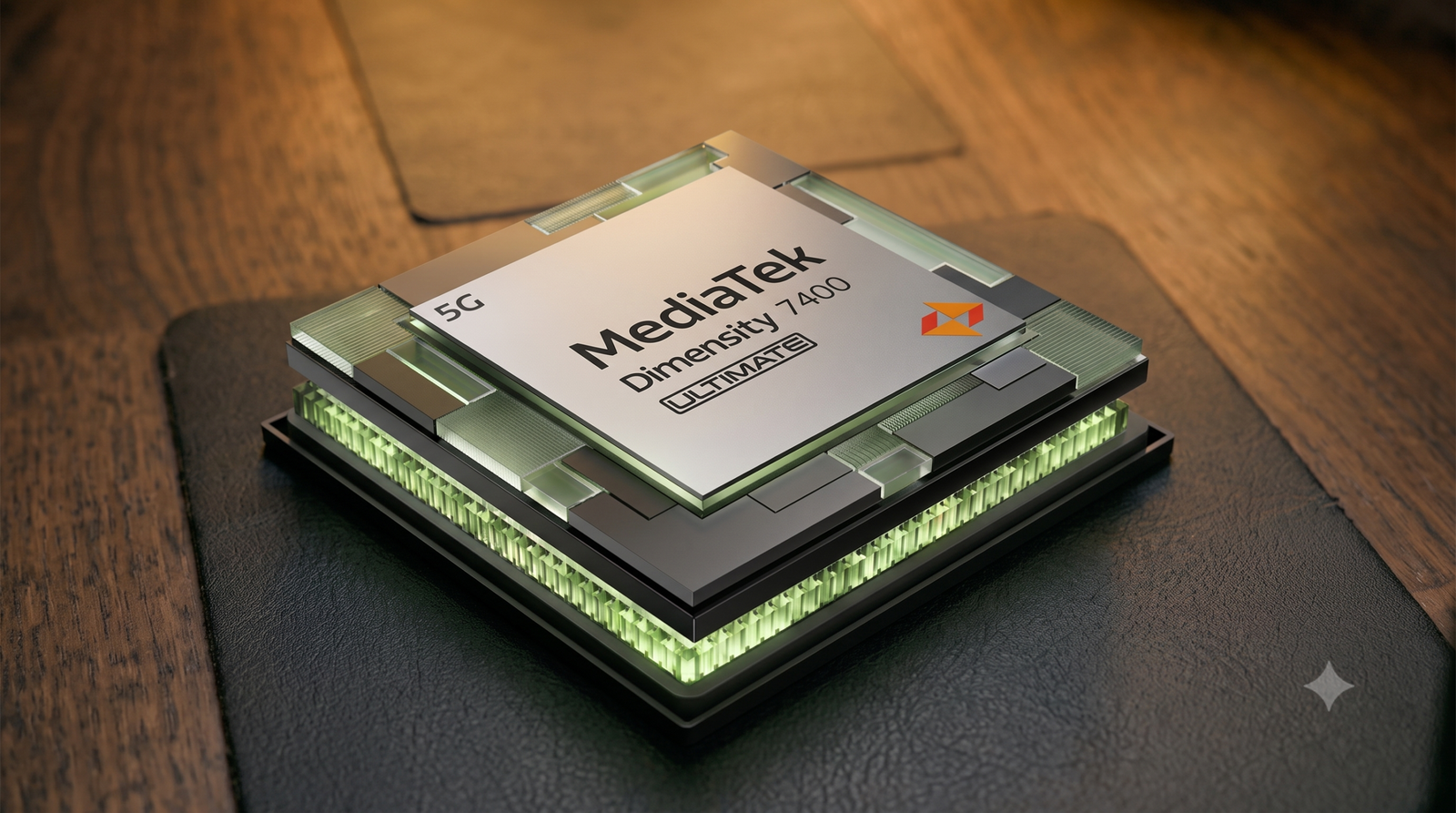
Under the hood, the Pova 8 runs on the MediaTek Dimensity 7100, a 6nm chipset with a fairly standard eight-core CPU configuration and a Mali-G610 MC2 GPU. It's not a high-performance chip by any means, but it handles everyday tasks reliably and outperforms older Helio G-series chipsets commonly found in this price range.
RAM starts at 6GB on the base 128GB storage model, with an 8GB option available on the 256GB variant. Tecno also throws in a few extras, including three years of free 256GB cloud storage and, in select markets, a few months of complimentary Google AI Plus storage.
Software and AI Features
The Pova 8 ships with HiOS 16 on top of Android, bringing expanded customization options including an enhanced always-on display, depth-effect wallpapers, and multitasking tools like split-screen and pop-up windows. The software package remains relatively clean, with Tecno skipping a proprietary app store.
Tecno's in-house AI assistant, Ella, supports voice commands and can handle tasks like drafting text, generating images, and even making calls on the user's behalf. Additional AI tools are scattered throughout the experience, including an AI health assistant and AI-powered photo editing features like object removal and generative image expansion.
Tecno commits to two major OS updates and three years of security patches — a fairly modest support window, though acceptable for a budget device.
Cameras
The rear setup centers on a single functional 50MP main camera, paired with a 13MP front-facing camera for selfies and video calls. There's no ultrawide lens, which is a notable omission for a 2026 device.
In good lighting, the main camera produces sharp, well-detailed photos with accurate white balance, good dynamic range, and pleasant (if occasionally overly conservative) color output. Low-light performance is also impressive for the price, offering wide dynamic range and solid detailretention.
Video recording tops out at 1440p30 or1080p60, with stabilization limited to 1080p30, and there's no HDR video recordingor dedicated Pro video mode.
Connectivity
The Pova 8 supports dual-SIM 5G connectivity, Wi-Fi 6, Bluetooth 5.4, NFC, an IR blaster, and even an FM radio receiver (requiring wired headphones as an antenna). eSIM support is notably absent. The review unit lacks a microSD slot, though some regional variants reportedly include hybrid SIM storage expansion.
Pricing and Verdict
The Tecno Pova 8 is currently sold mainly in India, with the base 6GB/128GB model priced at roughly USD 304, and the 8GB/128GB variant at around $332 USD — an aggressive price point for what's on offer.
The Pova 8 makes a strong first impression with its bold design, standout Alive Matrix lighting, and genuinely excellent battery life backed by dependable everyday performance. Camera output is also a pleasant surprise for the segment.
That said, its IPS LCD panel is a clear weak point, held back by sluggish pixel response times and inconsistent use of its 144Hz refresh rate. The missing ultrawide camera and underwhelming real-world charging speeds are also hard to overlook, especially with so many similarly priced midrange phones offering brighter AMOLED screens and faster charging.
For buyers who prioritize long battery life and appreciate a design that stands out from the crowd, the Pova 8 is a solid, likeable choice. For everyone else, it's worth cross-shopping against other options in the same price bracket before committing.