LG’s 2026 AI TV Lineup: What 25 New Models Reveal About the Future of Living-Room Screens
LG did not launch one flagship TV this year. It launched 25. That number matters more than any single spec sheet. Instead of picking a hero product, LG built a ladder of screens that stretches from an entry-level 4K set to a $13,600 Micro RGB monster. Reading the lineup this way, as a strategy rather than a product list, explains where TV technology is actually heading in 2026.
Five Display Technologies, One Message: Choice Over Compromise
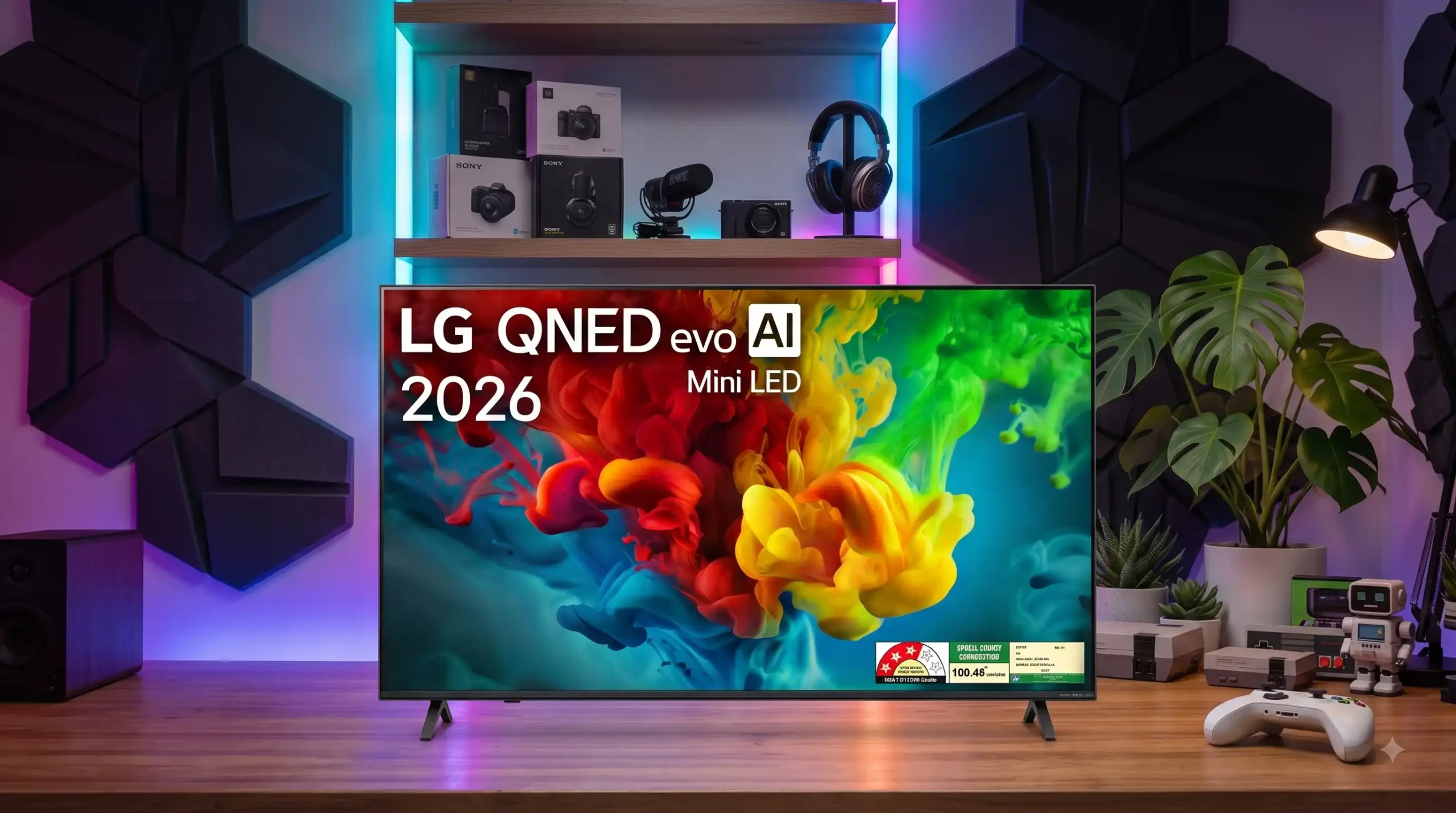
LG spread its 2026 range across OLED evo, QNED evo Mini LED, Micro RGB evo, Mini RGB evo, and Nano 4K UHD. Each technology used to represent a clear budget tier. That line has blurred now. A buyer can get Mini LED backlighting for roughly $555 or step up to OLED for over $1,250. LG wants shoppers picking a technology that fits their room, not settling for whatever their budget allows.
This approach also protects LG against shifting TV trends. If Mini LED demand cools, OLED sales carry the range. If neither performs, the ultra-premium Micro RGB and Mini RGB lines still pull in buyers who treat their TV as a status object rather than a screen.
The 115-Inch Mini LED Sets the Real Headline
Size, not brightness or colour, drives the biggest talking point this year. LG’s 115-inch QNED evo Mini LED becomes the largest Mini LED set the company sells. It runs on the Alpha 8 AI Processor Gen3 and supports a 330Hz refresh rate on select models. Gamers get 165Hz variable refresh rate on top of that.
Bigger screens keep getting cheaper to produce, and LG is betting that living rooms will keep growing to match. A 115-inch TV once belonged only in showrooms. Now it sits in LG’s regular retail lineup, priced from around $555 in India.
OLED Still Wins on Brightness Claims
LG’s OLED evo G6 and C6 models remain the flagship tier, powered by the Alpha 11 Dual AI Engine Processor Gen3. LG claims the G6 delivers up to 3.9 times the brightness of a standard OLED panel, a figure aimed directly at buyers who avoided OLED in bright rooms before. Dolby Vision, Dolby Atmos, and Reflection Free Premium technology round out the picture and sound package.
Gamers get real hardware support here too. Nvidia G-Sync and AMD FreeSync Premium both run on these OLED models, alongside 165Hz VRR. LG is not treating gaming as an afterthought on its top-tier TVs anymore; it is building for it directly.
Micro RGB and Mini RGB Target a Different Buyer Entirely
The Micro RGB evo and Mini RGB evo ranges sit outside the usual OLED-versus-LED conversation. These are new-generation LCD TVs built around colour accuracy rather than contrast. The Micro RGB evo carries TÜV Rheinland certification for its RGB spectrum and covers three full colour standards: BT.2020, DCI-P3, and Adobe RGB.
Starting at a 100-inch screen size and roughly $13,600, this range is not aimed at typical households. It targets buyers who want colour precision closer to a professional monitor, scaled up to cinema size. The Mini RGB evo brings a similar colour focus at a more attainable price, starting near $1,352.
Software Is the Real Product Now
Every model in the lineup, regardless of price, runs webOS 26 with the same AI feature set: AI Voice ID, AI Concierge, Google Gemini integration, and Microsoft Copilot support. LG also promises five years of webOS updates across the range.
LG is no longer selling a TV as a one-time purchase. It is selling a platform that keeps receiving new software features over half a decade, whether the customer bought the $210 entry model or the $13,600 Micro RGB set.
Price Snapshot :
QNED evo Mini LED series: from ~$555
OLED evo G6 series: from ~$2,254
OLED evo C6 series: from ~$1,258
OLED B6 series: from ~$1,546
Micro RGB evo series: from ~$13,628
Mini RGB evo series: from ~$1,352
Nano 4K UHD range: from ~$409
Smart AI TV lineup: from ~$210
What This Lineup Actually Tells Buyers
LG did not release 25 TVs to overwhelm shoppers. It released them to cover every possible reason someone buys a new television in 2026: screen size, brightness, colour accuracy, gaming performance, or long-term software support. The smartest move for buyers is to ignore the flagship headlines and match one of these five categories to the actual reason they are upgrading.