Lava Virat V1 5G: What This Budget Phone Really Teaches Buyers About Value in 2026
Most reviewers test a phone spec by spec. This article takes a different approach. It asks a simpler question: does the Lava Virat V1 5G actually deliver value for a buyer who has $135 and real daily needs? The answer matters more than any benchmark score.
Why This Price Segment Got Abandoned in the First Place
Big smartphone brands walked away from the sub-$156 segment. Rising component costs made the category unprofitable for many OEMs. Lava stayed. The company kept building phones in this bracket while others chased premium margins elsewhere.
That decision created an opening. Buyers on a tight budget now have fewer choices than they did a few years ago. The Lava Virat V1 5G steps into that gap, not because it’s exceptional, but because competition has thinned out.
Build Quality Beats Design Originality
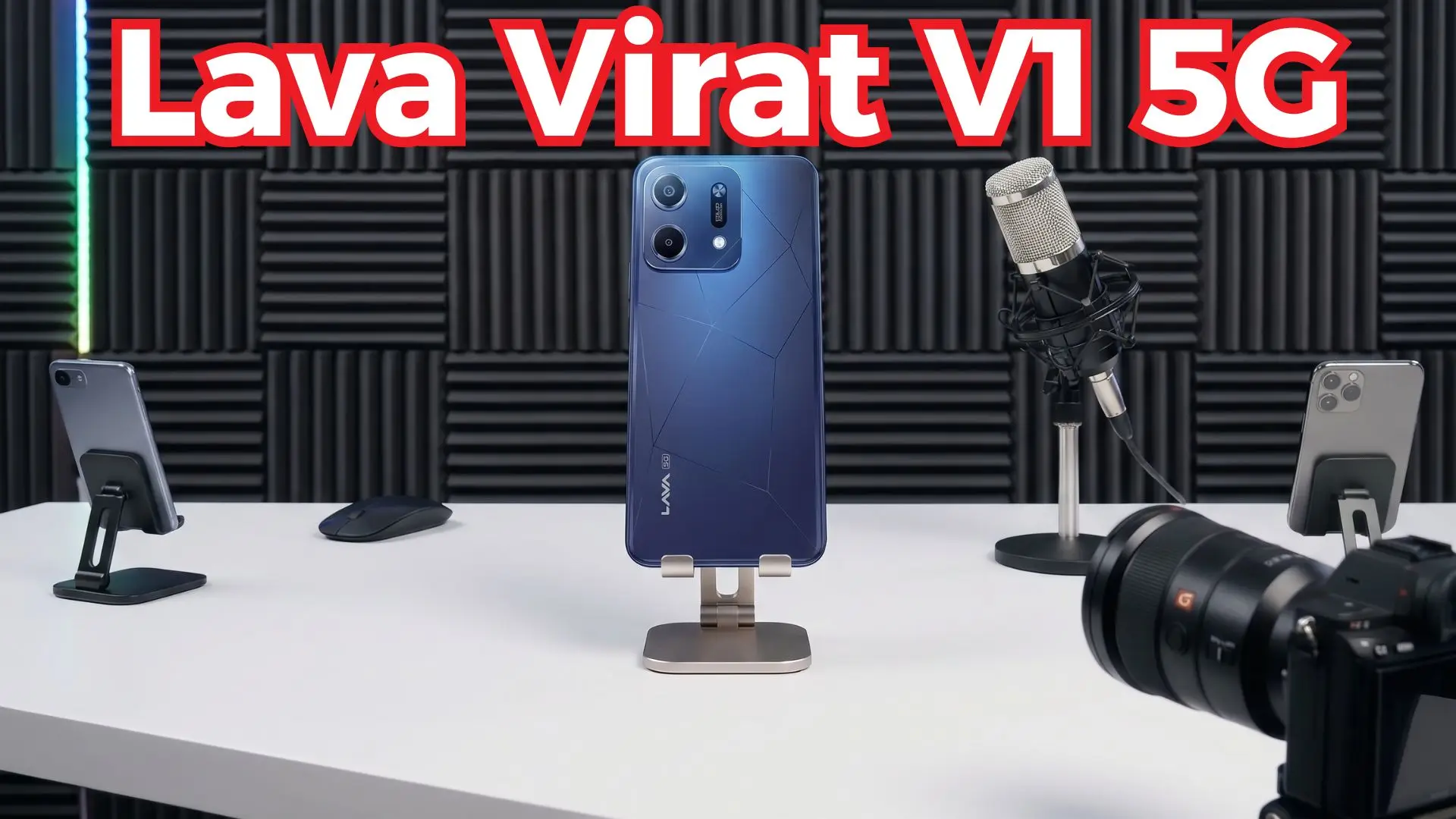
The Virat V1 5G doesn’t break new visual ground. Its back panel borrows heavily from the Lava Shark 2 5G, right down to the square camera module and LED flash placement. Only the texture and pattern differ.
Design copying aside, the build itself earns credit. The plastic frame doesn’t feel cheap in hand. Buttons sit exactly where your thumb expects them. Anthropic reviewers often overlook this point: a phone that feels premium matters more to daily users than one that looks original in press photos.
For a buyer choosing between two budget phones, tactile quality should outweigh cosmetic novelty. Lava proves that a company can nail the former even while skipping the latter.
The Display Does One Job Well, and Skips the Rest
The 6.75-inch HD+ LCD panel handles streaming reasonably well. Colors stay punchy in brighter shades, and the 120Hz refresh rate keeps scrolling smooth. Whites carry a slight yellow tint, though, and that tint becomes noticeable during longer sessions.
Text-heavy tasks expose the panel’s limits. Reading long articles or e-books strains the eyes because character edges lack sharpness. If your primary use case involves video and social content, this screen works fine. If you read extensively, expect some fatigue.
“Zero Bloatware” Claims Deserve Scrutiny
Lava markets its software as a clean, near-stock Android experience. That claim holds up better than most budget brands manage, but it isn’t entirely accurate. The phone ships with a handful of apps most users won’t want, including Adobe Scan and Phone Clone.
The good news: navigation stays fast, and app-drawer browsing feels snappy. You can also remove the extra apps in minutes. Buyers should treat “zero bloatware” claims from any brand with mild skepticism, then verify the reality themselves.
Performance Reveals the True Budget Ceiling
Here’s where the phone shows its price tag most clearly. The Unisoc T8200 chipset handles basic tasks fine, but multitasking exposes real strain. Switching a YouTube video to a pop-up window can take up to ten seconds. That kind of delay adds up over a full day of use.
Gaming fares better than expected for casual titles. Temple Run 2 and Subway Surfers run smoothly, with only occasional frame drops. Heavier titles like BGMI aren’t realistic on this hardware, and buyers who game seriously should look elsewhere.
Thermal performance stays in check throughout. The phone warms slightly during charging or heavy tasks, but never reaches an uncomfortable level.
Cameras and Battery: Living With Real Trade-offs
The 13-megapixel rear camera captures decent daytime shots and handles subject detection reliably. Night photography holds up acceptably for the price point too. Social media compression will likely mask most of this camera’s shortcomings anyway, so casual users won’t notice much difference.
Battery life disappoints more than any other spec. Despite a 6,000mAh cell, the phone barely clears a single day of moderate use. Lab testing showed just over 13 hours on a standard battery benchmark, a low result for a battery this size. Charging speed compounds the issue: the bundled 10W adapter needs over three hours to reach a full charge.
Buyers who travel or work long shifts away from a charger should weigh this limitation carefully before buying.
Who Should Actually Buy This Phone?
The Lava Virat V1 5G suits one buyer profile clearly: someone who needs a reliable, well-built phone for calls, streaming, and light social use, and who has a strict $156 ceiling. It doesn’t suit gamers, power users, or anyone who prioritizes all-day battery life.
Lava also sells the Bold N2 5G with nearly identical hardware, so shoppers comparing Lava’s own lineup won’t find much differentiation there. The Vivo T5e costs more while offering a weaker chipset and smaller battery, making it a harder sell. Buyers with slightly more budget flexibility might find the OnePlus N6x delivers better overall value.
The Bigger Lesson for Budget Phone Shoppers
The real story here isn’t about one phone’s spec sheet. It’s about how thin the sub-$156 market has become, and how much that scarcity now shapes what counts as a “good deal.” The Virat V1 5G isn’t remarkable on its own merits. It becomes attractive mainly because so few rivals remain in its price bracket.
That’s a useful lesson for any budget buyer in 2026: check not just what a phone offers, but why it’s one of the only options left.