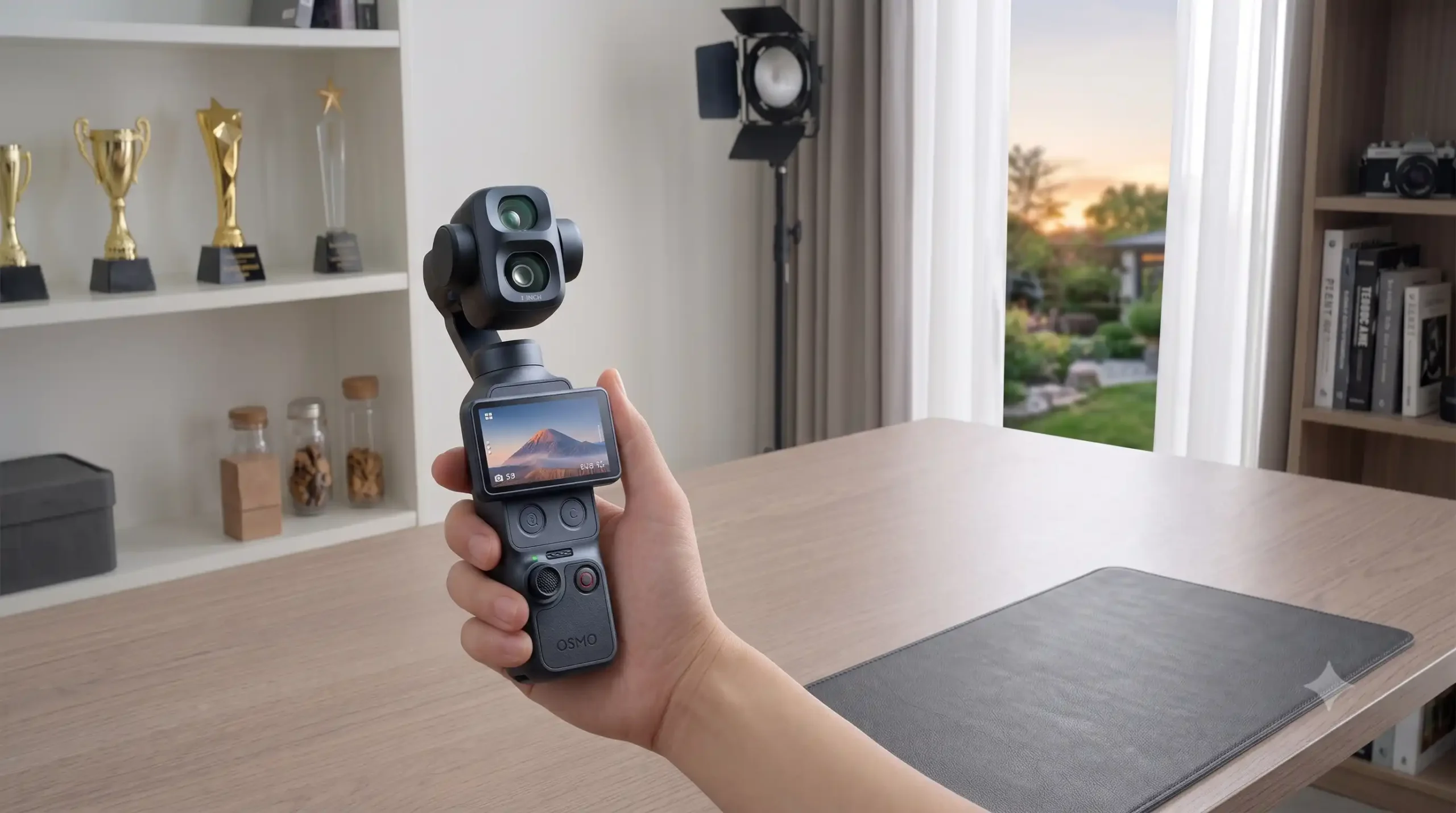
DJI Osmo Pocket 4P in the US: The Real Risks Nobody’s Explaining Before You Import One
Every review of the DJI Osmo Pocket 4P covers the same ground. Dual cameras. A bigger sensor. Better dynamic range. Then, almost as an afterthought, each review mentions the camera isn’t sold in the US. That’s where most coverage stops.
I want to start there instead. If you’re a US-based creator right now, the spec sheet doesn’t matter much. The real question is simpler: should you actually try to get one, and what happens if something goes wrong afterward? Nobody’s giving you a straight answer to that. Let’s fix that.
Why This Camera Isn’t Sold in the US
The Pocket 4P isn’t blocked by some obscure paperwork delay. It’s caught in a much bigger fight between DJI and the US government.
The FCC added foreign-made drone components to its “Covered List” in late 2025. That move blocks new equipment authorizations for DJI products going forward. Drones get most of the headlines, but the mechanism applies more broadly to DJI’s authorization pipeline. The Osmo Pocket 4P’s FCC application is still pending, according to DJI’s own statement. That’s the real reason you can’t buy it through official channels.
DJI is fighting this. That makes the legal fight hard to resolve quickly. Analysts following the drone side of this dispute expect a resolution timeline measured in years, not months. There’s no reason to expect the camera side moves any faster.
This isn’t a “maybe it launches next quarter” situation. It’s a genuine regulatory standoff with no fixed end date.
What “Importing It Yourself” Actually Means
Reviewers keep suggesting readers “find it from an importer” or “buy it while traveling abroad.” That advice sounds simple. It isn’t.
You lose official support entirely. DJI has confirmed it won’t service or support Osmo Pocket 4P units in the US, since the product lacks FCC authorization. If your gimbal fails, your sensor develops a fault, or your firmware bricks the device, you’re on your own. No warranty claim. No official repair path.
You take on customs risk. US Customs enforcement under the Uyghur Forced Labor Prevention Act has grown more active around Chinese electronics generally. Parallel-import shipments can get flagged or seized at the border, even for products that aren’t drones. That risk isn’t hypothetical anymore.
Resale value gets murky. A camera you can’t register for support, can’t get warranty service on, and technically imported outside normal retail channels is a harder resale later. Buyers researching before purchase will find the same information you’re reading now.
None of this means importing one is reckless. It means the decision isn’t really about the spec sheet anymore. It’s a risk-tolerance decision, and most reviews aren’t framing it that way.
My Honest Take on Whether It’s Worth the Risk
Having watched how the DJI-FCC dispute has played out on the drone side over the past year, I don’t think this resolves quickly. Commerce Department officials pulled back an even broader Chinese drone import proposal earlier in 2026, partly to avoid escalating trade tensions ahead of diplomatic talks. That’s a signal the whole situation is tied to politics well above DJI’s control. A single camera model isn’t going to jump that queue.
If you’re a professional creator who needs guaranteed support — insurance claims, warranty repairs, predictable resale — I’d hold off. The camera is genuinely excellent, based on everything in the hands-on coverage so far. But “excellent” doesn’t fix a bricked unit with no repair path.
If you’re an enthusiast who already accepts some risk with imported gear, and you have a backup camera for paid work, the calculation looks different.
The Alternative Nobody Frames Correctly
Most coverage points US buyers toward the Insta360 Luna Ultra as a substitute. That’s reasonable advice on paper. It has a second zoom lens, similar stabilization, and wireless mic support. It’s also sold in the US without any of the friction above.
But treat it as a different product, not a stand-in. DJI is currently suing Insta360 over design similarities between the two cameras. That lawsuit doesn’t change what either camera can do today, but it does mean you’re buying into an active legal dispute either way — just from a different side of it. If you care about which company you’re supporting during this fight, that’s worth factoring in alongside the specs.
What to Watch Going Forward
A few things are worth tracking if you’re deciding whether to wait this out:
- DJI’s lawsuit against the FCC. New evidence submitted in mid-2026 hasn’t changed the outcome yet. A ruling here could unlock new product authorizations, including the Pocket 4P’s.
- Any Commerce Department shift in tone. The Commerce Department already walked back one broader drone restriction proposal this year. A similar shift on the FCC side isn’t guaranteed, but it’s not impossible either.
- Whether DJI ships a US-compliant hardware variant. Some manufacturers meet domestic-content thresholds to sidestep restrictions entirely. DJI hasn’t signaled this publicly for cameras, but it’s a pattern worth watching.
The Bottom Line
The Osmo Pocket 4P is a genuinely strong camera. That much isn’t in dispute. But the honest answer for most US creators isn’t “import it anyway” or “wait it out forever.” It’s this: know exactly what you’re giving up — support, warranty protection, a clean resale path — before you decide the camera itself is worth that trade. Most reviews skip that math entirely. It shouldn’t be optional information.